Music Upper: MP3 Player & Edit
- 4.6
- Rating
- 500.00K
- Installs
- Free
- Price

 Analysis by App-foxy
When I use a local music player, I usually want one thing above all: less time spent hunting through a messy audio folder. Music Upper: MP3 Player & Edit is built around that practical problem. It is a free Music & Audio app from Afran sarkar that lets me organize, edit, and play audio in one place, rather than treating playback as the only important task.
That focus makes it different from a streaming service. I do not approach it as a replacement for a huge online music catalog. I see it as a tool for people who already have audio files on their device and want a more manageable way to handle them. The app has reached over 500 thousand installs and holds a 4.5 average from around 1.1 thousand ratings, which suggests that its straightforward purpose is connecting with a useful group of listeners.
After spending time with it, my main impression is that its value comes from combining two jobs that are often separated: arranging a personal collection and making small changes to individual tracks. That combination is more useful than it sounds, especially when the audio on a phone includes downloaded songs, recordings, practice material, sound files, or tracks with unhelpful names.
You May Also Like

 Blood Strike: 2.5 Anniversary
Blood Strike’s Loadouts Turn Every Drop Into a Tactical Gamble
A close look at Blood Strike’s custom loadouts: how fast access to signature weapons reshapes its battle royale rhythm, rewards preparation, and narrows the gap between fights.

 Pandora - Music & Podcasts
Pandora’s Music Is Easy to Start, but Harder to Recover
Pandora’s strength is its low-effort path from a seed to a station. Its weak spot is how much confidence it asks you to place in connection, setup, and quiet recovery.

 8 Ball Pool
 Is Built on Rivalries, Rematches, and Routine
A close look at the rivalries, rematches, shared routines, and unanswered safety questions that turn a quick pool match into a persistent mobile community.

 Samsung Music
’s Quiet Strength Is Playing What You Already Own
Its reach comes less from spectacle than from dependable access to a personal library. That simplicity is both the app’s strongest retention engine and its ceiling.

 AccuWeather: Weather Radar
AccuWeather Review: A Quick, Clear Forecast for Everyday Decisions
For everyday plans, the best forecast is the one you can understand quickly. AccuWeather makes rain timing, radar, and local conditions easy to act on, with a few trade-offs.

 Hill Climb Racing
Why Hill Climb Racing Still Turns Crashes Into One More Run
A tiny car, a bumpy hill and one more upgrade: Hill Climb Racing keeps resurfacing because its simple chaos makes every near-miss feel personal.
More From Our News Desk
View All News


Why the editing-and-organization focus matters
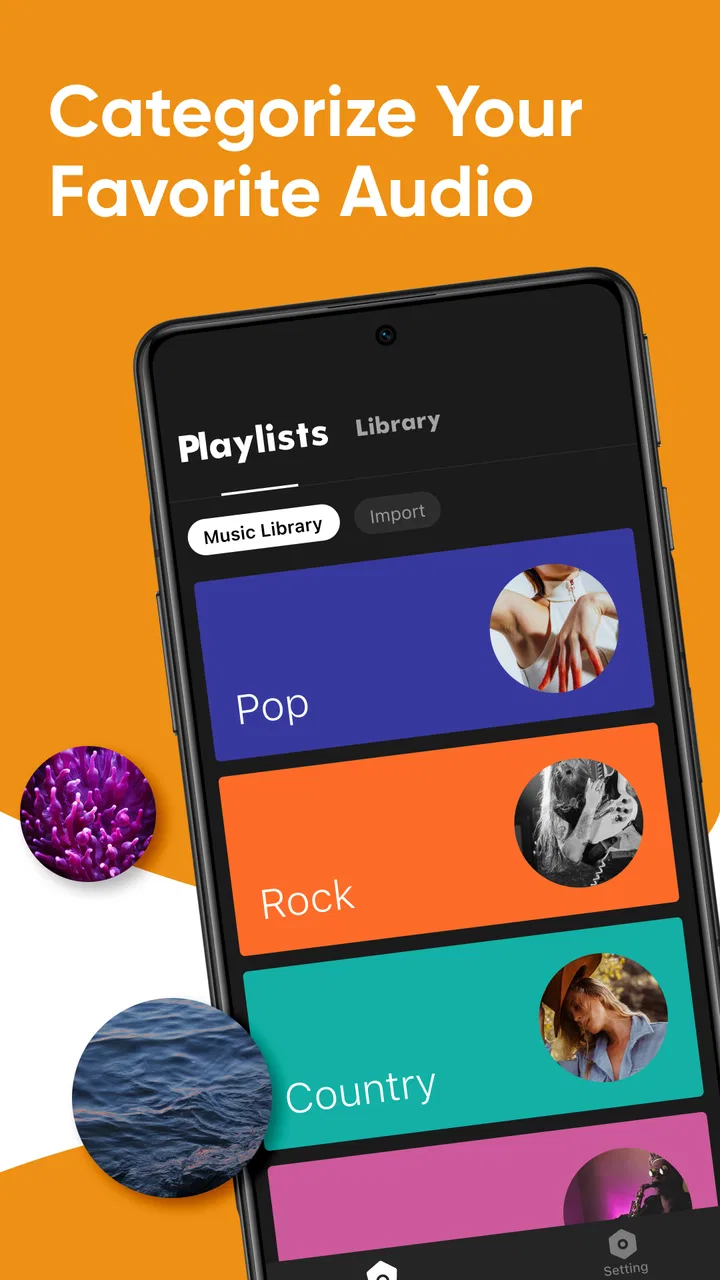
The most important capability here is not simply pressing play. It is the relationship between audio categorization and editing. A player can show a list of files, but a list alone does not solve much when several tracks have vague titles, inconsistent information, or no obvious order. Music Upper is aimed at making that collection easier to understand and use.
In everyday terms, I can think of it as a preparation step before listening. Instead of accepting the way audio files happen to appear, I can work toward a collection that feels intentional. That matters when I want to find one particular track quickly, create a sensible listening sequence, or separate music from other audio that has accumulated on the phone.
The editing side is equally important for people who keep audio for practical reasons. A short recording may need trimming before it is comfortable to replay. A song may begin with an unwanted pause. A spoken clip may contain an unnecessary section. I appreciate having an audio-focused app that treats those files as things I can manage, not just items that sit passively in storage.
This is also where the app’s name makes sense. It is not presenting itself as a complicated studio workstation. Its appeal is closer to a personal audio cabinet: put files in order, make sensible adjustments, and play them without switching between unrelated tools.
What this changes during normal listening
The practical effect is a smaller amount of friction. If I am listening casually, that may mean getting to a song without scrolling through several versions of similarly named files. If I am using audio for study or practice, it may mean keeping the useful material together and removing distracting beginnings or endings from a clip.
That sounds modest, but small improvements matter in a local library. Streaming apps are generally designed around search, recommendations, and online catalogs. A file-based player has a different responsibility: it should help me make sense of what I already own. Music Upper is more interesting when judged by that standard.
One useful habit is to organize files before I need them. If I wait until I am in a hurry, I am more likely to tolerate confusing names and duplicate tracks. When I have a quiet moment, I can use the editing and categorization workflow to prepare a cleaner set of audio. Later, playback becomes the easy part.
I also found that this approach suits listeners who do not want their personal audio mixed into a recommendation-heavy environment. There is no need to search for a track online or depend on a service deciding what should play next. The app is centered on the audio already available to me, which gives the experience a more direct and private-feeling rhythm, even though the real benefit is simply control over my own collection.
How I would use it in practice
I would begin with a quick review of the audio library rather than immediately changing everything. The goal is to identify the files that cause the most trouble: tracks with unclear titles, recordings that start too early, clips that are difficult to locate, and groups of audio that I want to hear together.
From there, I would handle the collection in small batches. Editing every file at once can turn a simple player into a chore. A better workflow is to prepare one category at a time, such as music for commuting, language-learning recordings, or personal voice notes. This is one of the more useful trade-offs of the app: it rewards a little organization, but it does not remove the need to decide how I want my library arranged.
For a track that needs adjustment, I would make the smallest change that solves the problem. If the beginning is distracting, I would avoid making a dramatic edit and focus only on the unwanted opening. If the ending contains silence, I would treat that separately. Keeping edits conservative is important because an audio editor can make a file more convenient while also making it harder to recognize later if I change too much.
After editing, I would return to playback and check the result immediately. This is a simple but valuable habit. A change that looks correct in an editing view may feel abrupt when heard from the start. Listening back helps me catch an awkward cut before I rely on the file during a workout, study session, or trip.
Another practical tip is to preserve the original file until I am satisfied. Editing is most useful when it is reversible in my personal workflow, even if the app’s exact file-handling behavior may vary by device. I would keep a copy of anything important before making substantial changes, especially recordings that cannot be recreated.
For regular playback, I would use the categorization tools to reduce the number of choices shown at one time. A large library can become tiring when every type of audio appears together. Separating listening purposes makes the player feel faster even when the number of files has not changed. This is a non-obvious benefit: organization improves attention, not just navigation.
A realistic everyday example
Imagine I have a collection containing songs, several spoken lessons, a few rehearsal recordings, and short clips sent by friends. I want to practice during a bus ride, but opening the library shows everything together. I first identify the lesson files, adjust any recording with a long empty lead-in, and arrange the relevant material so I can reach it without searching through unrelated tracks.
Once that preparation is done, the app becomes useful in a quiet way. I can start listening without repeatedly stopping to skip silence or wondering which similarly named file is the right one. The benefit is not a flashy feature; it is that the audio is prepared for the situation in which I plan to use it.
The same workflow applies to music. If I have several versions of a song or tracks copied from different sources, I can make the collection easier to browse before a long journey. I would not expect the app to discover new music for me, but I would expect it to make my existing music less frustrating to use.
Where it fits beside ordinary alternatives
Compared with a streaming service, Music Upper is better suited to local audio management and less suited to discovery. A streaming platform usually wins when I want new artists, curated playlists, synchronized catalogs, or recommendations. This app makes more sense when the files are already mine and the problem is organization.
Compared with a basic phone music player, its editing emphasis gives it a clearer purpose. A default player may be perfectly adequate for pressing play on a tidy collection, but it may feel limited when I need to prepare recordings or clean up the way audio is presented. Music Upper is most valuable before and between listening sessions, not only during them.
Compared with a dedicated professional audio editor, it should be approached as a more accessible option. I would choose a specialized editor for detailed production work, complex processing, or a workflow that depends on advanced controls. I would choose this app when the task is closer to everyday maintenance: make a file usable, keep the library understandable, and listen afterward.
That middle position is important. The app is not compelling because it tries to be every kind of audio software. It is compelling for someone who wants more control than a plain player offers without turning a quick edit into a technical project.
There is also a difference in mindset. Streaming services encourage me to think in terms of an external catalog, while this app encourages me to think in terms of files I have selected and arranged. Neither approach is universally better. If most of my listening happens online, the local-library advantages may not matter much. If I regularly use stored audio, they become much more noticeable.
The trade-offs I noticed
The first limitation is that the app’s usefulness depends on having audio to manage. Someone who listens almost entirely through online services may open it and find that it does not address the main reason they listen to music. It is not the right choice if the priority is discovering a large catalog rather than organizing personal files.
There is also a time cost. Categorization helps later, but it requires decisions now. I have to decide which files belong together and which edits are genuinely needed. People who want a completely automatic library may find that process less attractive. The app can support a cleaner collection, but it cannot replace personal judgment about what should be kept and how it should be arranged.
Editing brings its own responsibility. A careless cut can remove part of a recording or make a song feel unnatural. I would not treat the editor as a reason to modify everything. The best results come from targeted changes, followed by a complete listen to the affected portion. This is especially important for spoken audio, where a small cut can remove context rather than just silence.
File organization can also expose inconsistencies that were easy to ignore before. Once I start trying to make a library coherent, duplicate versions and unclear titles become more visible. That is useful, but it can make the first cleanup session feel longer than expected. I recommend starting with the audio I use most instead of attempting a complete overhaul.
Another trade-off is simplicity versus depth. A focused editor-player is easier to approach than a production suite, but it will not satisfy someone who expects a full recording environment. I would skip it for multitrack creation, advanced sound design, or detailed mastering. Its strength is practical control over ordinary audio, not professional studio work.
The app carries a Teen content rating, so families should consider that classification when deciding whether it fits a younger listener’s device. The rating does not change the app’s central purpose, but it is a detail worth checking before installation, particularly when a phone is shared.
Because the current version is 1.1.6 and the app was released on July 3, 2025, I would also keep expectations realistic about how mature the experience may feel on different phones. I would update through the normal app channel and test important edited files after an update. That is sensible practice for any newer utility that handles personal audio, especially when those files matter to me.
Who gets the most from Music Upper
I think the strongest audience is people with a growing collection of stored audio who feel that their current player is too passive. Students with lesson recordings, musicians reviewing practice takes, commuters carrying offline music, and anyone maintaining spoken clips can all understand the benefit quickly.
It is also a good fit for listeners who prefer a hands-on library. If I enjoy deciding how my audio is grouped and I want small edits available without opening a separate tool, the combined workflow is appealing. The app gives those tasks a single home, which reduces the mental jump between “find this file,” “make it usable,” and “play it.”
People who share audio between devices may appreciate the organizational mindset as well, although I would still check each edited result before relying on it elsewhere. The most useful preparation is not merely changing a title or trimming a pause; it is creating a collection that remains understandable when I am tired, offline, or in a hurry.
I would recommend skipping it if I wanted an online music subscription, automatic discovery, or a full professional editing suite. I would also skip it if my local library is already perfectly organized and I never need to change audio. In that situation, a basic player may be enough and the extra editing focus would not add much.
For everyone else, I would start with one real problem instead of installing it with vague expectations. Pick a group of files that is hard to browse, or one recording that needs a clean beginning or ending. If Music Upper makes that task easier, its wider value will become clear through use.
My final take after using it
Music Upper: MP3 Player & Edit succeeds because it treats personal audio as something worth preparing. The combination of categorization, editing, and playback gives it a clear role between a basic player and a professional editor. I found that role useful when the issue was not finding music online, but making the audio already on my device easier to live with.
The app is free, which makes it easy to try without turning the decision into a purchase commitment. Its developer, Afran sarkar, has kept the concept easy to understand: bring personal audio together, improve its organization, and play it afterward. That clarity is a strength, although users expecting streaming features or studio-level editing should choose a different kind of app.
My best advice is to use it deliberately. Begin with the files you hear most often, make restrained edits, listen back to confirm them, and organize by real listening situations rather than by categories that look tidy but are not useful. That workflow reveals the app’s strongest quality: it turns audio maintenance into a practical part of listening instead of a separate technical task.
For a person with a messy local library, that can be enough to make a noticeable difference. I would recommend Music Upper to anyone who wants more control over stored audio without stepping into complicated production software. It is not a universal music solution, but within its focused purpose, it offers a sensible and approachable way to make personal listening more organized.
FAQs for Music Upper: MP3 Player & Edit
01What features does Music Upper: MP3 Player & Edit provide?
Music Upper offers a comprehensive suite of features including a robust MP3 player, audio editing tools, and customizable playlists. Users can edit tracks with fade in/out, trim audio clips, and apply equalizer settings. The app also supports numerous audio formats, ensuring compatibility with a wide range of music files.
02Is Music Upper: MP3 Player & Edit free to use?
Music Upper is available as a free download with basic features. However, it offers in-app purchases for advanced editing tools and ad-free experience. The free version is functional for casual users, but those seeking more robust features may consider opting for the premium version.
03How user-friendly is the interface of Music Upper?
The interface of Music Upper is designed to be intuitive and user-friendly. It features a clean layout with easy navigation, making it accessible for both beginners and experienced users. The editing tools are straightforward, allowing users to perform tasks efficiently without a steep learning curve.
04Does Music Upper support offline music playback?
Yes, Music Upper supports offline music playback. Users can download tracks to their device and listen to them without an internet connection. This feature is particularly useful for users who want to enjoy music during travel or in areas with limited connectivity.
05What audio formats are compatible with Music Upper?
Music Upper is compatible with a variety of audio formats, including MP3, WAV, AAC, and FLAC. This versatility ensures that users can play and edit almost any audio file they have, making it a versatile choice for music enthusiasts who have diverse music libraries.
Pros
- User-friendly interface for easy navigation.
- Supports a wide range of audio formats.
- Includes built-in audio editing tools.
- Offline playback for uninterrupted listening.
- Customizable playlists for personalized experience.
Cons
- Contains ads which may disrupt usage.
- Limited cloud integration options.
- No lyrics sync feature available.
- Advanced editing tools require in-app purchase.
- Occasional crashes on older devices.

Music Upper: MP3 Player & Edit
Gallery